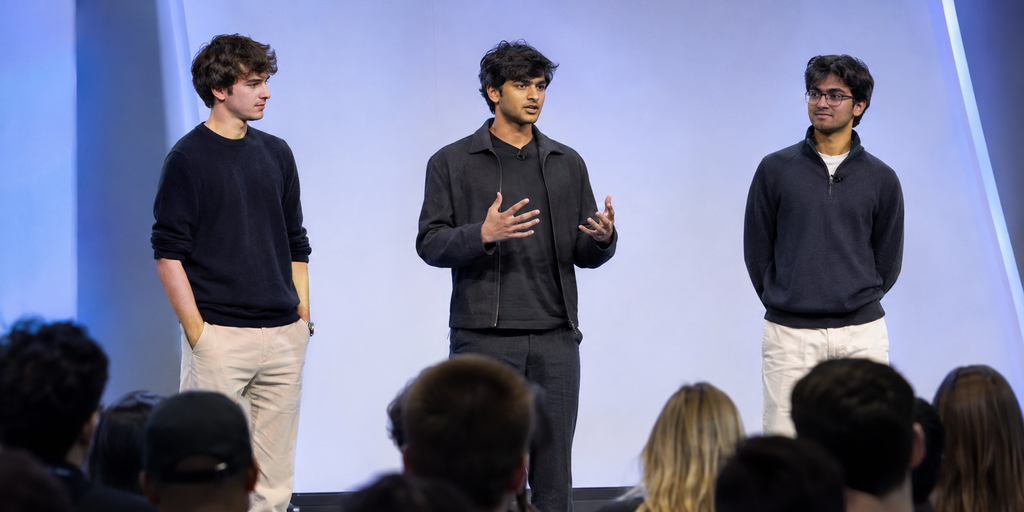
On November 10, Mercor announced a funding round large enough to put a $20 billion price tag on a company that most people outside the AI industry had barely heard of a few years ago.
For someone looking for remote AI training work, the immediate question is obvious: does a $750 million investment mean more projects, better rates, or a faster route to getting hired?
Not necessarily. But the announcement does reveal something important about where the AI industry is heading. Mercor is betting that companies will need more than powerful AI models. They will need people who understand real jobs well enough to teach, test, and improve those models.
That shift could shape the next generation of AI training contracts.
Mercor’s $750 million round, explained
Mercor confirmed a $750 million Series D on November 10, 2026, valuing the privately held company at $20 billion. The announcement named participants including Benchmark, Felicis, General Catalyst, NVIDIA, Salesforce, Zoom, and several other investment firms.
For perspective, the company’s previous round came just over a year earlier:
| Announcement | Funding round | Reported amount | Company valuation |
|---|---|---|---|
| October 2025 | Series C | $350 million | $10 billion |
| November 2026 | Series D | $750 million | $20 billion |
In other words, Mercor’s headline valuation doubled in roughly a year. That is a major signal of investor confidence, not proof that the company has doubled its profits or the number of projects available to contractors.
Another distinction is worth keeping: the Series D included an employee tender, meaning part of the transaction involved employees selling shares. Mercor has not publicly specified how much of the $750 million represents new capital going into the company versus existing shares purchased from employees. Treating the entire amount as a newly available operating budget would be misleading.
Mercor wants to sell something bigger than expert recruitment
Mercor began as a technology-enabled hiring platform. It became better known for connecting AI laboratories with people who can evaluate models and produce specialized training material.
That work ranges from checking complex medical explanations to examining legal reasoning, financial analysis, programming, and other professional tasks. Our earlier article on why AI companies hire domain experts explains why expert judgment matters even when models can produce polished answers.
The new funding announcement emphasizes an expanded ambition: helping businesses build evaluations and improve AI agents using the workflows and standards of their own organizations.
An AI model may handle a generic accounting question yet struggle with a company’s particular reporting process. It might draft an insurance response but miss an internal rule about when a claim must be escalated. A business cannot safely judge these systems solely by whether they write convincing sentences.
Mercor’s proposed role is to help organizations turn their actual work into measurable tests, identify where an AI agent falls short, and support further training. It says demand for these services is spreading from frontier AI labs to technology companies and large enterprises.
Why a company’s own workflows matter
Consider a hypothetical bank evaluating an AI agent that reviews loan documents.
The agent must do more than summarize the files. It may have to identify missing information, follow specific compliance rules, flag an inconsistent figure, and decide when a human reviewer needs to step in. A correct-looking answer could still fail if it ignores one of those steps.
To test the agent meaningfully, someone must define the workflow, prepare representative cases, explain what a good decision looks like, and check the results. A financial professional with experience in that process may be more useful than a general-purpose annotator.
Mercor has already been involved in this kind of specialist evaluation. In November, it worked with Google on a benchmark of demanding engineering tasks. As we reported in Google and Mercor’s engineering benchmark, the tested systems struggled with full professional workflows even when they could complete many individual checks.
That benchmark wasn’t a new hiring announcement. It was evidence of how much careful task design and human verification can matter.
The five-million-expert figure needs context
Mercor says its network now includes more than five million experts across different professions. Its newsroom also reports paying approximately $5 million per day across its expert network.
Both are company-reported figures. More importantly, a network of five million people is not the same as five million active, paid contractors working every day. Mercor has not established that every person in the network currently has a project, earns regularly, or qualifies for every assignment.
This matters because platform growth and individual experience can move in opposite directions. A larger marketplace may attract more clients, but it can also include more applicants competing for each available contract.
An impressive funding announcement says very little about the status of any one person’s application dashboard.
What kinds of AI training work could grow?
Mercor’s enterprise strategy points toward several areas where expert contribution may become important. These are possible directions suggested by the company’s strategy, not newly confirmed vacancies:
- Professional workflow design: Turning real tasks in finance, healthcare, law, engineering, or business operations into realistic evaluation scenarios.
- Expert grading and verification: Checking whether an AI system followed the correct process, respected constraints, and reached a defensible result.
- Agent testing: Evaluating tools that complete multi-step work across simulated applications, rather than simply answering questions.
- Quality and safety review: Identifying failures that are costly, risky, or difficult for automated grading alone to detect.
The company acquired Deeptune in 2026, bringing in technology for recreating software environments where AI agents can practice professional workflows. That helps explain why Mercor is talking increasingly about environments, evaluations, and post-training rather than only recruiting people to score chatbot answers.
The potential opportunity for specialists is that professional experience can become a useful qualification for AI work. The challenge is that many of these projects may require deep subject knowledge, precise written reasoning, and familiarity with complex workflows.
A $20 billion valuation doesn’t guarantee more contractor income
It would be tempting to interpret this announcement as a sign that hourly rates are about to rise. There is no confirmed evidence in the funding announcement of a company-wide pay increase, expanded contractor eligibility, or guaranteed new assignments.
The amount a contributor earns still depends on the particular project: eligibility, screening, approved billable hours or tasks, rates, available workload, and whether the engagement continues.
Someone might pass an assessment and wait for a match. Another person might start a well-paid project that lasts only a few weeks. A third could find consistent work. None of those experiences can be predicted from the company’s valuation.
If you’re new to Mercor, our Mercor review explains the application process and the gap between joining the platform and getting paid work.
How interested contractors should respond
The useful response is not to apply to every opening because Mercor raised money. Instead, pay attention to whether the work matches your real expertise.
A qualified engineer should make their practical project experience clear. A finance professional should describe analytical and regulatory work accurately. Someone with coding experience should be ready to demonstrate it in technical screening. Across disciplines, strong explanations and the ability to check an AI system’s mistakes are valuable skills.
You can explore Mercor’s expert opportunities, but review the actual contract requirements, location eligibility, pay model, and anticipated hours before treating an opportunity as income.
It also makes sense not to depend on a single marketplace. Other companies, including micro1, recruit specialists for AI training and evaluation, though their available projects and policies differ. Our comparison of AI training platforms provides a wider starting point for comparing options.
These links are general platform resources, not applications to a new hiring drive created by this funding round.
The bigger story is who gets to define good AI work
Mercor’s funding announcement is ultimately about where the next challenge in artificial intelligence may lie. Models are becoming increasingly capable, but turning them into reliable tools for a bank, hospital, engineering firm, or other enterprise requires a detailed understanding of how that organization actually works.
That understanding often lives with people who have spent years doing the job.
The important news for AI training contractors isn’t simply that Mercor is worth $20 billion. It’s that investors are putting enormous value on the systems that turn human professional expertise into better AI. Whether that creates sustained opportunities for individual contributors will depend on the projects that follow, not the funding headline alone.
Disclosure: This article contains referral links. I may earn a commission when eligible applicants complete qualifying activities, at no additional cost to them. Referral links do not guarantee acceptance, paid projects, or earnings.