| AI Training Platform | Type of Work | Advertised pay | Payout |
|---|---|---|---|
| Ethos | Expert calls, market research, data annotation | $50+/hr | Bank transfer |
| Mercor | AI contracts, AI data training | $50–$350/hr | Stripe Connect |
| micro1 | AI, domain expertise, data roles | $30–$200/hr | Deel |
| Handshake AI | AI training, evaluation, annotation | $40–$200+/hr | Stripe |
| AfterQuery | AI domain expertise | $20–$250/hr | Stripe Connect |
| SME Careers | Subject-matter expert work | $20–$120/hr | Deel |
| Turing | Software, AI, data and LLM roles | $30–$200/hr* | Deel |
| Sovrano AI | AI evaluation, annotation, RLHF | Up to $150/hr | Bank transfer |
| Alignerr | LLM training and AI evaluation | $40–$150/hr | Stripe/Wise |
| Vetto AI | AI training, domain-expert tasks | $10–$100/hr | Rippling |
Table of Contents
Looking for legitimate remote AI training jobs? There are now platforms that connect professionals, developers, researchers, writers, students and subject-matter experts with companies working on AI models.
But there is an important catch: Joining a platform does not automatically mean you will have work or earn the advertised hourly rate. Selection can take time, projects can have country or skill restrictions, and work availability can change.
I have researched and followed a number of these platforms and have also had first-hand experience with some of them. This guide brings together the platforms worth checking if you want to explore remote AI training work in 2026.
Quick answer: What are the best AI training platforms?
If you’re looking for remote AI training opportunities, platforms such as Ethos, Mercor, micro1, Handshake AI, AfterQuery, SME Careers, Turing, Sovrano AI, Alignerr and Vetto AI offer different types of AI-related work.
The work can include AI evaluation, data annotation, model response writing, RLHF, technical review, expert research, coding, domain-specific evaluation and other tasks used to improve AI systems.
Pay varies substantially. Some expert projects advertise rates above $100 per hour, while entry-level annotation and task-based projects can pay considerably less.
The most important thing to understand is that advertised hourly rates are not guaranteed earnings. Your actual income depends on whether you pass the screening process, receive a project, how much work is available and the terms of that particular project.
What are AI training platforms?
AI training platforms are online platforms that connect human workers or subject-matter experts with companies that need human input to develop, evaluate and improve artificial intelligence models.
People working on these platforms may be asked to:
● Evaluate AI-generated answers
● Compare responses from different AI models
● Write or rewrite responses
● Label or annotate data
● Check factual accuracy
● Review code
● Create training examples
● Evaluate model reasoning
● Provide expert knowledge
● Complete research tasks
● Perform RLHF-related work
● Assess AI-generated text, images, audio or video
The work is often remote and project-based.
You don’t necessarily need to be an AI engineer. Depending on the project, companies may need doctors, lawyers, finance professionals, teachers, writers, researchers, engineers, programmers, linguists, designers and other subject-matter experts.
This is why the AI training market is interesting for people who have professional knowledge but don’t necessarily want a traditional software engineering job.
How I selected these AI training platforms
I didn’t simply put together a list of websites offering “AI Jobs.”
The platforms in this guide have been selected based on:
1. Personal experience with some of the platforms.
2. Detailed research into the platforms and their opportunities.
3. Evidence of people actually being selected for projects and receiving payment. 4. The type of AI-related work available.
5. The range of skills and professional backgrounds accepted.
6. The usefulness of the platform for people looking for remote work.
Keep in mind that the AI training industry changes quickly. A platform that has plenty of work today may have fewer projects tomorrow.
Most platforms also have some type of screening process. This can include:
● Skill assessments
● Technical tests
● AI interviews
● Domain-specific assessments
● Identity verification
● Client interviews
● Final client approval
So these should be treated as remote work opportunities to apply for, not instant-income websites.
1. Ethos
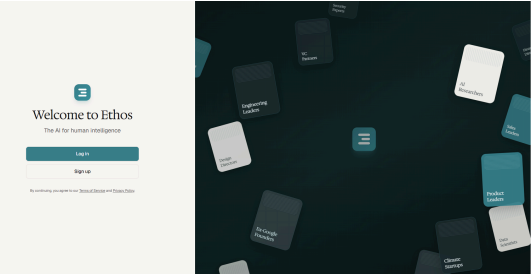
Ethos is an AI-powered platform connecting professionals with different remote opportunities.
The platform can be particularly interesting if you have professional or specialist knowledge and are comfortable participating in expert-oriented work.
Work: Expert calls, market research and data annotation
Skill level: Medium to Advanced
Advertised pay: $50+/hr
Payout: Bank transfer/Wise
Best for: Professionals and subject-matter experts
Ethos isn’t limited to one specific type of AI task. Depending on the project, opportunities can involve research, expert input, data work or other AI-related activities.
If you already have professional experience in a particular field, it is worth checking what projects are currently available.
2. Mercor
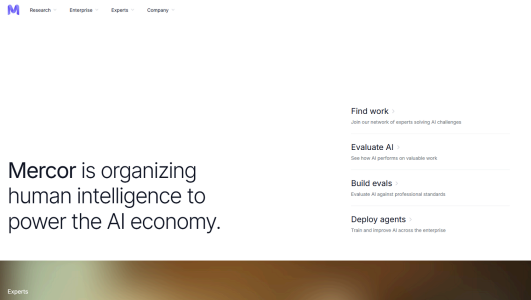
Mercor has become one of the better-known platforms for connecting professionals with remote contract opportunities involving AI.
Mercor uses AI-based screening and interviews to assess candidates before matching them with projects.
Work: AI-related contracts and AI data training
Skill level: Medium to Advanced
Advertised pay: $50-$350/hr
Payout: Bank transfer through Stripe Connect
Best for: Experienced professionals, technical workers and subject-matter experts
The types of roles can vary significantly. Depending on demand, Mercor may recruit people with backgrounds in areas such as software engineering, mathematics, science, finance, medicine, writing and other specialist fields.
One thing to remember is that a high advertised hourly rate does not mean every applicant will receive a project at that rate.
Selection depends on the specific role and client requirements.
3. micro1
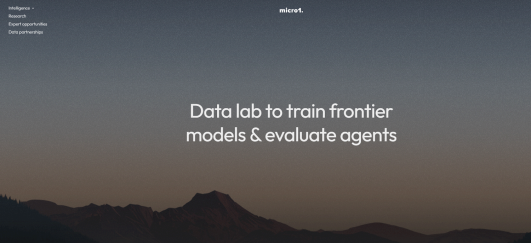
micro1 focuses on remote talent, including people working on AI-related projects.
It can be particularly relevant for professionals with technical or domain expertise.
Work: AI, domain expertise and data roles
Skill level: Medium to Advanced
Advertised pay: $30-$200/hr
Payout: Bank transfer through Deel
Best for: Technical professionals and experienced specialists
micro1 tends to have a selective hiring process. Some opportunities are project-based, while others can involve longer-term contracts.
If you have strong technical skills or professional expertise, it is worth checking the available roles rather than assuming the platform is only for programmers.
4. Handshake AI
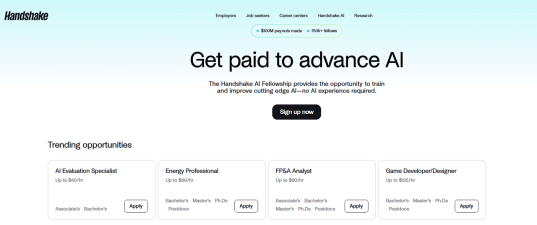
Handshake AI offers project-based opportunities related to AI training and evaluation.
The platform can be relevant to a broader range of workers because projects may involve everything from data annotation to specialist knowledge.
Work: AI training, evaluation, annotation and expert tasks
Skill level: Beginner to Advanced
Advertised pay: $40-$200+/hr
Payout: Stripe
Best for: People looking for project-based AI work
Projects can vary considerably, so requirements should be checked for each individual opportunity.
For someone new to AI training, this is the type of platform worth monitoring because not every AI training project requires advanced programming skills.
5. AfterQuery
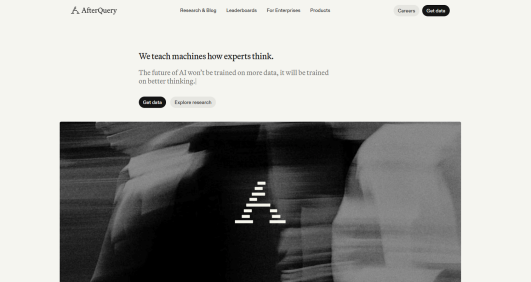
AfterQuery focuses heavily on connecting AI projects with people who have domain expertise.
This makes it particularly interesting if you have knowledge in a professional field rather than a purely technical background.
Work: AI domain expertise
Skill level: Medium to Advanced/Expert
Advertised pay: $20-$250/hr
Payout: Stripe Connect
Best for: Finance, technology and other domain experts
AI companies need more than programmers.
They also need people who understand how professionals actually work in different industries. That is where expert platforms such as AfterQuery can fit.
If you have several years of experience in a specific field, don’t overlook these opportunities simply because you don’t have an AI job title.
6. SME Careers
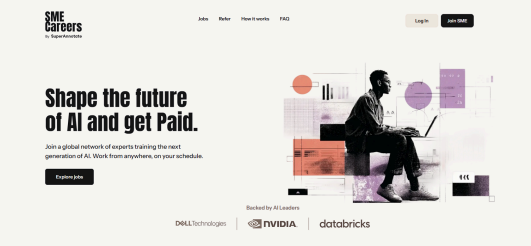
SME Careers focuses on subject-matter expert opportunities.
SME stands for Subject Matter Expert, meaning the value you bring is primarily your knowledge and experience in a particular field.
Work: Subject-matter expert projects
Skill level: Medium to Expert
Advertised pay: $20-$120/hr
Payout: Deel
Best for: Finance, technology, engineering, linguistics and other specialists
This type of platform is particularly relevant to professionals who want to use their existing career experience in the AI industry.
You don’t necessarily need to retrain as a machine-learning engineer. Your existing expertise can be the skill that an AI company needs.
7. Turing
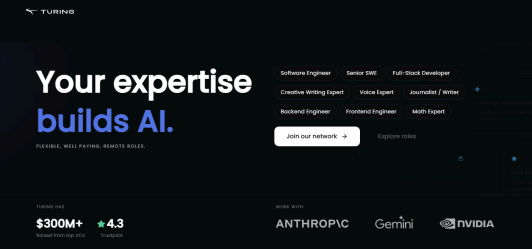
Turing is a broader remote technology platform that also offers AI, data and LLM-related opportunities.
It has traditionally been known for connecting technical talent with global companies, but its opportunities extend into AI-related work.
Work: Software development, AI training, data and LLM roles
Skill level: Intermediate to Expert
Advertised pay: $30-$200/hr, with some roles potentially higher
Payout: Deel
Best for: Developers, AI professionals and technical experts
Turing uses screening and matching processes to connect talent with projects.
If you are a software developer, data professional or AI specialist, Turing is worth adding to your list of platforms to monitor.
8. Sovrano AI
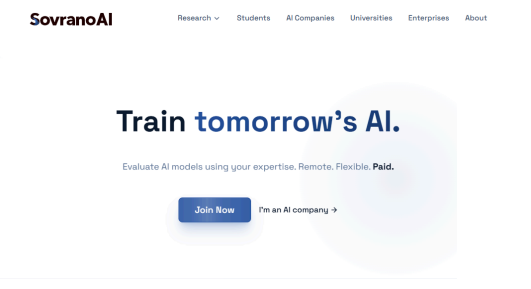
Sovrano AI is a newer platform focused specifically on AI-related work.
The opportunities can range from general AI evaluation and annotation to more specialized expert projects.
Work: AI evaluation, data annotation, RLHF and model response writing
Skill level: Beginner to Expert
Advertised pay: Up to $150/hr
Payout: Bank transfer
Best for: AI evaluators, generalists and subject-matter experts
One advantage of this type of platform is the range of work.
Someone with limited AI experience may find general evaluation or annotation work, while someone with deep professional expertise may qualify for specialized projects.
As always, check the requirements for the specific project before applying.
9. Alignerr
Alignerr focuses on human expertise for training and evaluating large language models.
The platform is particularly relevant if you have strong knowledge in a specific field.
Work: LLM training and AI evaluation
Skill level: Medium to Expert
Advertised pay: $40-$150/hr
Payout: Stripe/Wise
Best for: Subject-matter experts and AI evaluators
The onboarding process can be selective, and available projects can change.
For professionals interested in contributing their expertise to AI systems, Alignerr is another platform worth checking.
10. Vetto AI
Vetto AI is focused on AI training and domain-expert work.
Its opportunities can include areas such as health, travel and wellness, making it potentially useful for professionals outside traditional technology roles.
Work: AI training and domain-expert tasks
Skill level: Intermediate to Expert
Advertised pay: $10-$100/hr
Payout: Rippling/bank transfer
Best for: Non-technical professionals and subject-matter experts
Vetto AI is an early-stage platform, so project availability can change as new clients and AI projects are added.
Other AI training platforms worth checking
The ten platforms above are the main ones covered in this guide, but they aren’t the only places where AI-related remote work can appear.
Here are a few additional platforms worth monitoring.
Crowdato
Crowdato offers task-based AI data work, including audio and video annotation.
Work: AI audio/video annotation
Skill level: Entry level to Medium
Pay: $4-$30/hr
Payout: Multiple options
Best for: Entry-level annotation work
This type of work generally has a lower barrier to entry than highly specialized AI expert projects.
Outlier
Outlier offers project-based AI data and model-training tasks.
Work: AI data tasks and annotation
Skill level: Beginner to Medium
Pay: $5-$30/hr
Payout: PayPal
Best for: People looking for project-based AI work
Work availability can vary considerably between projects and locations.
DataAnnotation
DataAnnotation focuses on tasks related to AI text generation, reasoning and LLM training.
Work: LLM training, AI text and reasoning
Skill level: Medium
Pay: $20-$60/hr
Payout: PayPal
Best for: Strong writers, researchers and analytical workers
An assessment is generally required, and available work can vary.
What kind of people can work in AI training?
One of the biggest misconceptions about AI training is that you need to be an AI engineer. That’s not necessarily true.
AI companies need human expertise across many fields.
Depending on the project, opportunities may be available for:
● Software developers
● Data scientists
● Engineers
● Finance professionals
● Accountants
● Doctors and healthcare professionals
● Lawyers
● Researchers
● Professors
● Teachers
● Writers
● Editors
● Linguists
● Translators
● Mathematicians
● Psychologists
● Designers
● Business professionals
● Students
● Generalists
The key question is not simply:
“Do I know AI?”
It is often:
“What knowledge or skill can I provide that helps an AI system become better?”
For example, a finance professional may be asked to evaluate whether an AI-generated financial explanation is accurate.
A programmer may review AI-generated code.
A doctor may evaluate medical responses.
A writer may assess whether an AI response is clear, accurate and well-written.
That is the basic idea behind much of the human-in-the-loop AI training industry.
How much do AI training jobs pay?
There is no single standard AI training salary.
Pay depends on:
● Your expertise
● The platform
● The client
● Project complexity
● Country
● Assessment results
● Type of work
● Availability of projects
Entry-level annotation tasks may pay only a few dollars per hour, while specialized professional projects can advertise $50, $100 or even $200+ per hour.
Some highly specialized projects advertise considerably higher rates.
However, this distinction is extremely important:
An advertised hourly rate is not the same thing as guaranteed income.
If a platform advertises $100/hr, that doesn’t mean you will work 40 hours every week at $100/hr.
You may have to pass an assessment first. A project may have limited hours. The project may end. There may be periods when no suitable work is available.
Think of these platforms as a pipeline of remote opportunities, rather than a guaranteed monthly salary. How do AI training jobs work?
The process usually looks something like this:
1. Create an account – Register on the platform and complete your profile.
2. Add your expertise – Enter your education, professional experience, technical skills and other relevant qualifications.
3. Complete screening – Depending on the platform, you may need to complete an assessment, technical test or AI interview.
4. Wait for matching – If you pass the screening, the platform may match you with suitable projects. 5. Complete client screening – Some projects require another interview or approval from the end client.
6. Work on the project – Once accepted, you’ll receive instructions and complete the assigned AI training or evaluation tasks.
7. Get paid – Payment depends on the platform and project terms.
The entire process can take days or weeks. In some cases, finding a suitable project can take considerably longer.
Can beginners get AI training jobs?
Yes, some AI training projects are accessible to people without advanced technical skills. However, beginner-friendly does not mean no skills are required.
Entry-level opportunities can include:
● Data annotation
● Basic AI response evaluation
● Content review
● Classification tasks
● Simple quality checks
● Language-related tasks
At the same time, many higher-paying projects require significant professional or technical expertise.
If you’re a beginner, it can make sense to build experience with simpler tasks while also applying to projects that match your existing skills.
Do you need coding skills for AI training jobs?
No. Coding is not required for every AI training job.
Programming skills are valuable for technical AI projects, but AI companies also need people with non-technical expertise.
For example:
| Background | Possible AI training work |
|---|---|
| Software developer | Code evaluation and AI coding tasks |
| Finance professional | Financial response evaluation |
| Doctor | Medical AI evaluation |
| Lawyer | Legal AI evaluation |
| Teacher | Education-related AI evaluation |
| Writer | AI response writing and evaluation |
| Linguist | Language and translation tasks |
| Researcher | Research and source evaluation |
| Generalist | General AI evaluation and model response tasks |
This is one reason the AI training industry has created opportunities beyond conventional technology jobs.
What if Stripe isn’t available in your country?
Some AI platforms use Stripe or Stripe Connect for contractor payments.
If Stripe isn’t directly available to you, the platform may sometimes create or manage the necessary payment setup through Stripe Connect.
However, don’t assume this will happen for every platform or every country.
Always check the platform’s current payment instructions before accepting a project. Other platforms may use providers such as:
● Deel
● Wise
● PayPal
● Rippling
● Direct bank transfer
Payment availability can change, so check the platform’s current terms rather than relying on an old blog post or Reddit comment.
How long does it take to get selected?
This is one of the most important things to understand before applying.
AI training platforms are not usually instant-income websites.
A typical process can involve:
Application → assessment → interview → verification → client approval → project onboarding Some applicants may move through the process quickly.
Others may wait weeks.
Why you shouldn’t rely on just one platform
I strongly recommend treating AI training platforms as a portfolio of opportunities rather than relying on one website.
There are several reasons.
Projects end
AI training projects are often temporary.
Demand changes
A platform may have hundreds of openings one month and fewer opportunities the next. Your expertise may not match current projects
You could be qualified but still have no suitable project available.
Country restrictions matter
Some projects are available only in certain countries.
Screening takes time
You can pass one platform’s assessment while waiting for another.
For these reasons, applying to several relevant platforms can give you more options. That doesn’t mean applying blindly to every AI website you find.
Apply where your skills and experience match the requirements.
How to improve your chances of getting selected
Competition can be significant, particularly for higher-paying expert projects. Here are some practical ways to improve your profile.
Complete your profile properly
Don’t leave important sections blank.
Include:
● Education
● Professional experience
● Certifications
● Technical skills
● Industry experience
● Languages
● Relevant projects
● Research experience
Highlight your actual expertise
Don’t simply write: Finance. Be specific.
For example:
Financial analysis, investment research, accounting, financial markets and Excel. Specific skills make it easier for platforms to determine which projects may fit you.
Take assessments seriously
Some platforms use assessments to determine whether you qualify for specific projects.
Treat them like a job interview.
Keep your CV updated
Your CV should clearly explain what you have done, rather than simply listing job titles.
Apply quickly to relevant opportunities
Some projects can attract a large number of applicants.
If you see a project that matches your experience, don’t wait unnecessarily before applying.
Don’t exaggerate your experience
AI companies are often looking for genuine domain expertise.
Claiming skills you don’t actually have can create problems during assessments or client interviews.
What should you check before joining an AI platform?
Before investing time in an application, check the following.
1. Who is the company?
Look for the company’s official website and information about its business.
2. What type of work is offered?
AI training is a broad term. Find out whether the platform offers:
● Annotation
● AI evaluation
● Expert review
● Coding
● RLHF
● Research
● Data collection
● Content generation
3. How does the screening work?
Check whether there is:
● An assessment
● Interview
● Identity verification
● Client approval
4. How are you paid?
Look for information about:
● Payment provider
● Payment frequency
● Minimum payout
● Fees
● Supported countries
● Currency
5. Is work guaranteed?
Usually, you should assume no unless the contract explicitly guarantees a certain number of hours. 6. How long is the project?
Some projects may last weeks, while others can continue for months.
7. Are there country restrictions?
Never assume a platform’s global availability means every project is available in every country.
Are AI training platforms legitimate?
There are legitimate companies operating in the AI training and human-data space, but not every website advertising AI jobs should automatically be trusted.
Before joining an unfamiliar platform, research:
● The company
● Its official website
● The job description
● Payment terms
● Contractor agreement
● Privacy policy
● Reviews and community discussions
● Whether people have reported actually completing work and receiving payment Be particularly careful with websites that:
● Ask you to pay money to access work
● Promise guaranteed income
● Promise unusually high earnings for almost no work
● Ask for unnecessary sensitive information
● Don’t clearly explain the company or project
● Use pressure tactics to make you pay or sign up immediately
A professional AI training company should be able to explain what the work involves and how contractors are paid.
Join the official communities
AI training platforms can change quickly.
New projects may be announced through:
● Discord
● Telegram
● Platform dashboards
● Official social media accounts
If a platform has an official community, joining it can help you learn about new opportunities and project updates.
However, always verify important information through the platform itself.
A random social media post should not override the official project terms.
Why AI training work is different from a traditional remote job
An AI training contract isn’t necessarily the same as a conventional full-time remote position. Many opportunities are:
● Contractor-based
● Project-based
● Temporary
● Part-time
● Flexible
● Dependent on client demand
You may therefore have periods of significant work followed by periods with little or no work. This is why I would not look at an advertised rate and immediately calculate it as a monthly salary.
For example, a project paying $50/hour for 10 hours is very different from a full-time contract paying $50/hour for 160 hours.
Hours available matter just as much as the hourly rate.
How to approach AI training platforms as a remote worker
A practical approach is to build a small portfolio of opportunities.
For example:
Step 1: Identify your strongest professional skills.
Step 2: Find platforms that recruit people with those skills.
Step 3: Apply to several relevant platforms.
Step 4: Complete assessments carefully.
Step 5: Keep track of applications and project status.
Step 6: Compare actual work availability, not just advertised hourly rates.
Step 7: Keep applying while waiting for projects.
This approach is more realistic than expecting one platform to provide continuous work.
AI training platforms vs traditional freelancing
AI training is also different from traditional freelancing.
With platforms such as Upwork or Fiverr, you generally market yourself directly to clients and compete for individual freelance projects.
With AI training platforms, the platform may:
● Screen you
● Match you with a project
● Handle contracts
● Handle payments
● Provide task instructions
● Manage communication with the client
The trade-off is that you may have less control over the type and volume of work.
For someone who wants to work remotely without constantly searching for individual freelance clients, AI training platforms can be another avenue worth exploring.
Should you apply to every AI training platform?
No.
The better approach is to apply selectively.
If you’re a software engineer, prioritize platforms and projects looking for technical professionals. If you’re a finance professional, look for finance-related expert projects.
If you’re a writer, researcher or linguist, look for projects requiring those skills.
If you’re a beginner, look for opportunities where the requirements genuinely match your current experience.
The goal isn’t to have accounts on every AI platform. The goal is to find projects that match your skills.
What you should know before applying
Here are the most important points from this guide:
● AI training is a broad category of remote work.
● You don’t always need coding skills.
● Subject-matter experts can be valuable to AI companies.
● Higher advertised rates usually come with higher skill requirements.
● Advertised pay is not guaranteed income.
● Project availability can change.
● Selection can involve assessments and interviews.
● Some projects have country restrictions.
● Payment methods vary between platforms.
● AI training work is often contract or project-based.
● Applying to multiple relevant platforms can reduce your dependence on one source of work. ● Always read the project and payment terms before accepting work.
Frequently asked questions
What are AI training jobs?
AI training jobs involve human workers helping develop, evaluate or improve AI systems. Tasks can include evaluating AI responses, annotating data, writing training examples, checking accuracy, reviewing code and providing subject-matter expertise.
Do I need an AI degree to work in AI training?
No. Some projects require technical AI knowledge, but others need expertise in fields such as finance, medicine, law, education, writing, research, engineering and languages.
How much do AI training jobs pay?
Pay varies widely by platform, project and expertise. Some entry-level tasks pay only a few dollars per hour, while specialized expert projects can advertise rates above $100 per hour. Advertised rates should not be treated as guaranteed income.
Can beginners apply for AI training jobs?
Yes. Some platforms have beginner-friendly annotation and evaluation projects. However, many projects still require strong writing, analytical, language or domain-specific skills.
Can I do AI training work from home?
Many AI training projects are remote and can be completed from home. However, individual projects may have location restrictions.
Do AI training platforms provide full-time jobs?
Some projects can be longer-term, but many AI training opportunities are contract-based or project-based. Work availability is not necessarily continuous.
Do AI training platforms use Stripe?
Some platforms use Stripe or Stripe Connect, while others use Deel, Wise, PayPal, Rippling or direct bank transfers. Payment methods vary by platform and country.
How long does AI platform screening take?
It varies. Some applications may move quickly, while others can involve assessments, interviews, verification and client approval that take weeks.
Is AI training the same as data annotation?
Not exactly. Data annotation is one part of AI training. AI training can also involve response evaluation, expert review, RLHF, coding evaluation, research, model testing and other human-feedback tasks.
Why did I get accepted but not receive work?
Being accepted to a platform does not necessarily mean you have been assigned a project. Work depends on client demand, your skills, location, project requirements and available hours.
Final thoughts
AI training has created a new category of remote work that goes beyond traditional software development. You don’t necessarily need to become a machine-learning engineer to participate.
Your existing professional knowledge may be valuable.
A finance professional can evaluate financial answers. A doctor can review medical responses. A programmer can assess AI-generated code. A writer can evaluate the quality of AI-generated content. A researcher can check sources and reasoning.
That’s what makes this space interesting.
At the same time, it’s important to approach AI training platforms realistically.
Don’t look at a $100/hour advertised rate and assume you’re going to earn $100/hour every day.
Selection can be competitive. Projects can take time to arrive. Work can disappear when a contract ends. Payment methods can vary by country.
Instead, treat these platforms as another source of remote contract and freelance opportunities.
Create profiles on platforms that match your skills, complete the assessments honestly, keep your CV updated and monitor new projects.
The AI training industry is still evolving, and the platforms, projects and payment arrangements can change quickly.
For that reason, I’ll continue updating this list as new AI training platforms and remote opportunities become available.
Disclosure
This post contains a few referral links. I may receive a small bonus if you get hired through my referral link.
The referral does not change the information provided in this article. Always review the platform’s current terms, project requirements and payment conditions before applying.
Important note
The pay figures mentioned in this article are advertised or reported ranges and should not be interpreted as guaranteed earnings.
AI training platforms can change their rates, project availability, eligibility requirements and payment methods at any time. Always verify the current details directly with the platform before applying or accepting a project.

Leave a Reply